

New Zealand Dollar
What is it?
The NZD is New Zealand's currency — the New Zealand dollar. Its exchange rate is the price of one NZD in terms of another currency, most importantly the US dollar.
When people say "the dollar is weak" they mean one NZD buys fewer US dollars than it used to. When they say "the dollar is strong" it buys more.
That number — how many US cents one NZD is worth today — quietly affects almost everything NZ buys, sells, earns and pays. Most people never think about it. But it's one of the most important numbers in the NZ economy.
Where does the exchange rate come from?
The NZD exchange rate is set by global currency markets — millions of buyers and sellers trading currencies every second of every day. No single person or institution controls it.
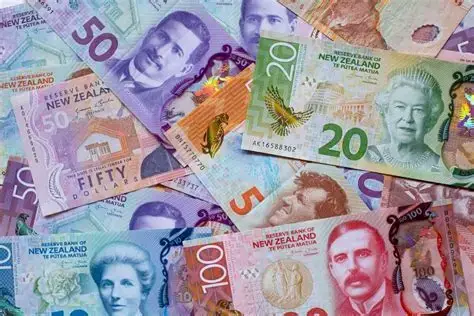
The Reserve Bank of New Zealand (RBNZ) used to intervene in currency markets directly — buying or selling NZD to influence the rate. Since 1985, when NZ floated the dollar, the RBNZ has largely stepped back from direct intervention. The market sets the rate.
What the RBNZ does instead is set the Official Cash Rate (OCR) — the interest rate that influences borrowing costs across the economy. Higher interest rates tend to attract foreign investment, which increases demand for NZD and pushes the dollar up. Lower rates do the opposite.
What makes the NZD go up?
Higher interest rates — When NZ interest rates are higher than other countries, foreign investors move money into NZ to earn better returns. To do that they need to buy NZD — which increases demand and pushes the dollar up.
Strong commodity prices — NZ is a major exporter of dairy, meat, wool and timber. When global commodity prices are high, overseas buyers need more NZD to pay for NZ exports — which pushes the dollar up.
Positive economic data — Strong GDP growth, low unemployment, and a healthy trade balance all signal a strong economy — which attracts investment and lifts the dollar.
Global risk appetite — When global investors feel confident, they move money into higher-risk, higher-return currencies like the NZD. When they feel nervous, they retreat to safe havens like the USD, JPY and CHF — and the NZD falls.
What makes the NZD go down?
Lower interest rates — When the RBNZ cuts the OCR, returns on NZ investments fall. Foreign money moves elsewhere, demand for NZD drops, and the dollar weakens.
Weak commodity prices — When dairy or meat prices fall on global markets, NZ earns less foreign currency — putting downward pressure on the NZD.
Global uncertainty — Wars, financial crises, and pandemics all send investors rushing to safe haven currencies. The NZD — seen as a higher-risk, commodity-linked currency — typically falls sharply when global uncertainty spikes.
NZ-specific bad news — A credit rating downgrade, weak GDP, rising debt or political instability can all undermine confidence in NZ and push the dollar lower.
Why does it matter for everyday Kiwis?
Imports cost more when the dollar is weak. NZ imports enormous amounts — fuel, electronics, cars, clothing, machinery, medicines. All of it is priced in foreign currencies, mostly USD. When the NZD weakens, every imported item costs more NZ dollars. That cost flows through to the shelf price.
Fuel is the most obvious example. Oil is priced globally in USD. When the NZD buys fewer US cents, each barrel of oil costs more NZD — before the oil price itself has even moved. A weak dollar and a high oil price at the same time is a double hit. That's exactly what happened in 2026.
Exports earn more when the dollar is weak. There's a flip side. When the NZD is low, NZ exporters — Fonterra, meat processors, timber companies — receive more NZD for every dollar of product they sell overseas. A weak dollar is good for exporters. It's bad for importers and consumers.
Overseas travel costs more. A weak NZD means your holiday in Europe, the US or Japan costs more. Everything from flights to hotels to a coffee in Paris becomes more expensive when the dollar is low.
Mortgage rates can be affected. NZ banks borrow money on international markets — in foreign currencies. When the NZD is weak, it costs them more to service that overseas debt — costs that can flow through to mortgage and lending rates.
Where is the NZD right now?
As of late March 2026, the NZD is sitting around 58 US cents — down from a high of around 61 cents in early January 2026.
The fall has been driven by a combination of factors: the Middle East conflict pushing investors toward safe haven currencies, a Fitch credit rating downgrade of NZ in March, weaker-than-expected GDP figures, and the general global uncertainty created by the energy crisis.
At 58 cents, the NZD is near the lower end of its recent trading range. For context, the NZD hit a high of around 88 US cents in 2011 at the peak of the commodity boom. The long-run average is around 65–68 cents. At 58 cents, the dollar is meaningfully weak by historical standards.
Q&A — Common questions and misconceptions
"A weak dollar is bad for NZ." It depends on who you are. A weak dollar is bad for consumers, importers and anyone buying overseas goods or travelling. It's good for exporters — Fonterra, meat companies, tourism operators receiving foreign currency. The economy has both winners and losers. It's not simply bad or good.
"The government should strengthen the dollar." The government doesn't directly control the exchange rate — the market does. The RBNZ can influence it indirectly through interest rates, but deliberately trying to hold the dollar at a specific level is difficult, expensive, and often counterproductive. Most economists agree floating the dollar — letting the market set it — is the right long-term approach.
"A strong dollar is always better." Not for exporters. A strong NZD means Fonterra gets fewer dollars for every tonne of milk powder sold overseas. NZ's export sector — which is the backbone of the economy — actually prefers a lower dollar. There's a permanent tension in NZ between what's good for consumers (stronger dollar) and what's good for exporters (weaker dollar).
"The dollar falling means the economy is collapsing." Not necessarily. The NZD is highly sensitive to global sentiment and commodity prices — factors that have nothing to do with NZ's domestic economy. The dollar can fall sharply because investors are nervous about global events even when NZ's own economy is healthy. It's a signal worth watching but not a direct measure of economic health.
"Why don't we just use the Australian dollar or the US dollar?" Some small countries do adopt another country's currency — usually to gain stability. But NZ giving up the NZD would mean giving up control of monetary policy entirely. The RBNZ could no longer set interest rates to manage NZ's economy. We'd have to accept whatever the US Federal Reserve or the RBA decided — regardless of what NZ needed. Most economists consider that a significant loss of economic sovereignty.
Appears in
This building block connects to the following articles in the Big Picture NZ library as they are published.